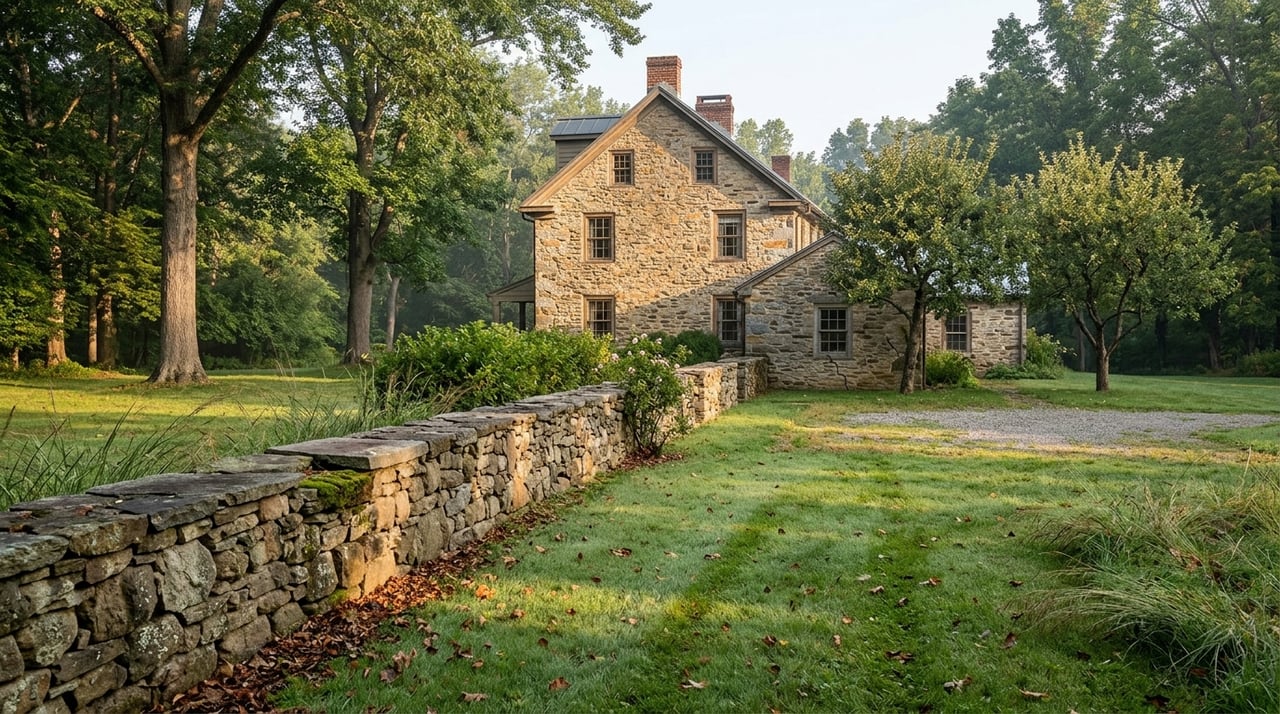
Drive west out of Emmaus on Route 29 and the development thins out fast. By the time you're past the turnoff for Old Zionsville, where the Vera Cruz Jasper Quarry sits as a reminder that people have been working this ground for roughly 10,000 years, you're in stone farmhouse country. Long driveways. Barns still standing. The kind of property that draws a buyer who wants acreage and history, not a subdivision.
What that buyer usually doesn't know, until their agent tells them or their lender's underwriter flags it, is that the single biggest variable in how smoothly that farmhouse closes has nothing to do with the house. It's whether the well and septic system get checked by anyone with authority to say no. And in Pennsylvania, that answer depends on which municipality drew the line around that particular parcel, not on the age or condition of the equipment in the ground.
No State Law Says Anyone Has to Look
Pennsylvania has no statewide requirement that a septic system be inspected before a home changes hands. The decision belongs entirely to the local municipality, administered through its Sewage Enforcement Officer. Some townships have adopted point-of-sale ordinances that require an inspection at transfer. Many haven't. The result is a real patchwork across Lehigh County, where a rural corner of Upper Milford Township can have a completely different closing sequence than a property a few miles away in a township that treats the sale as none of its business.
This matters more in Western Lehigh Valley than in most of the region because so much of the housing stock out here still runs on private wells and on-lot septic. The rural stretches around Shimerville, Powder Valley, Old Zionsville, and Corning are predominantly well-and-septic communities, a legacy of farmland that was never within reach of municipal water and sewer lines and, in the more historic pockets, never needed to be. A buyer moving from a Center Valley subdivision with public utilities into one of these farmhouses is stepping into a system where the property, not the township's infrastructure department, is responsible for its own water and waste. Whether a third party ever verifies that system works before the buyer takes ownership is a matter of local ordinance, not state law.
The Ground Itself Adds a Layer
Even where no ordinance forces the question, the geology out here gives buyers a reason to ask it anyway. Western Lehigh Valley sits partly within the Reading Prong, a geological belt that runs through this part of Pennsylvania and is known for naturally elevated radon potential in groundwater and soil gas. A well that tests clean for bacteria can still carry radon levels worth knowing about before a family moves in and starts drinking from the tap.
Upper Milford Township adds its own local wrinkle. The red shale and limestone geology under much of the township makes iron-bearing groundwater common rather than exceptional, which is why orange staining on fixtures and metallic-tasting water show up so often in the older wells around Shimerville and Powder Valley that many longtime owners simply treat as normal. Farther west, where the township's fields drain toward tributaries of the Perkiomen Creek, agricultural land use raises a separate concern: nitrate contamination from fertilizer runoff, which is exactly the kind of thing a standard closing-day water test is designed to catch, provided someone actually orders one.
None of this means a well or septic system in this part of the valley is more likely to fail than one anywhere else. It means the specific things worth testing for here (radon, iron and manganese, nitrates) are shaped by a geology that doesn't change at a township line even when the inspection requirements do.
What This Costs, and Who Actually Pays
Pennsylvania's Real Estate Seller Disclosure Law requires sellers to state their property's water source, sewage system type, age, and any known problems on the standard disclosure form, signed before the buyer commits to the agreement of sale. It only covers what the seller actually knows. It is not a substitute for testing, and it does not obligate the seller to investigate anything before signing.
Where the real friction shows up is in the standard agreement of sale itself. Pennsylvania Association of Realtors guidance on the standard contract language is direct: if a buyer's inspection company requires it, the seller is responsible, at the seller's own expense, for locating the septic tank, providing access to it, and emptying it, then restoring the property to its prior condition before settlement. That sounds routine until you consider how often it isn't. Plenty of longtime owners in this part of the valley have never had reason to locate their own tank, because it has simply worked without complaint for decades. Finding out where it sits, and what shape it's in, days before a scheduled settlement is a worse position to negotiate from than knowing months in advance.
Federal financing adds another layer that has nothing to do with the township. If an FHA appraiser sees signs of septic trouble during a visit, the loan cannot close until a local health department or licensed sanitarian confirms the system passes. USDA loans require a professional septic check as a standard condition, independent of what the appraisal shows. A buyer financing a stone farmhouse with either program should assume the system will get a look regardless of what the township requires.
Here's roughly what that looks like in practice, based on current typical ranges for this kind of work:
| Task | Typical range | Who usually pays |
|---|---|---|
| Water test (bacteria, nitrates, basic chemistry) | Roughly $50 to $350 | Buyer, as part of due diligence |
| Septic inspection (tank pump, interior check, drain field walk) | Roughly $300 to $600 | Buyer, unless a local ordinance shifts it to the seller |
| Septic pumping alone | Roughly $375 to $500 in Lehigh County | Whoever schedules it, often the seller pre-listing |
| New well, if an old one fails testing | $5,000 to $15,000, more in hard-rock areas | Whoever negotiates it into the deal |
| New conventional septic system | $3,500 to $15,000 | Whoever negotiates it into the deal |
That last row is the number that should focus a buyer's attention. A well or septic replacement is not a cosmetic repair credit. It is a five-figure decision that can appear in a negotiation with very little warning if nobody checked before the offer went in.
A Sequence That Protects Both Sides
Sellers of well-and-septic properties in this part of the valley are better served by getting ahead of the question than by waiting for a buyer's inspector to raise it. Locating the tank now, scheduling a pump-out and inspection before listing, and keeping the receipts turns a potential delay into a selling point. A disclosure form backed by recent, documented maintenance reassures a buyer far more than a blank line ever will.
Buyers should ask two things before they get emotionally attached to a property out here: which municipality has jurisdiction, and whether that municipality's Sewage Enforcement Officer requires an inspection at transfer. If the answer is no, that doesn't mean skip the test. It means the buyer, not the township, is the only party with an incentive to order one, and the request needs to go into the agreement of sale rather than assumed as a given.
A Few Direct Questions
Does Pennsylvania require a septic inspection before a house can be sold? No. There is no statewide mandate. Some municipalities require one through a point-of-sale ordinance enforced by the local Sewage Enforcement Officer, and many don't, which is why it's worth confirming township by township rather than assuming.
Who pays for the septic inspection? It varies. Under the standard agreement of sale, if a buyer's inspector requires access to the tank, the seller pays to locate, empty, and restore it. The inspection itself is typically ordered and paid for by the buyer as part of due diligence, unless a local ordinance shifts that responsibility.
What happens if the well tests high for radon or nitrates? Results like these usually don't kill a deal. They typically move into negotiation, either as a repair item (a radiation mitigation system or filtration setup) or a price adjustment, and the specific fix depends on what the test actually shows and what a licensed water treatment professional recommends.
A stone farmhouse in Old Zionsville or a property tucked into the Shimerville hills isn't a harder buy than anything else in the Lehigh Valley. It's a different kind of buy, one where the paperwork that protects you doesn't come from the township automatically and has to be requested on purpose. If you're weighing a purchase or a sale on a well-and-septic property anywhere in Western Lehigh Valley, The Rebecca Francis Team can walk you through exactly which questions apply to your specific parcel before you're standing at a closing table finding out the hard way. Request a private consultation to start that conversation early.