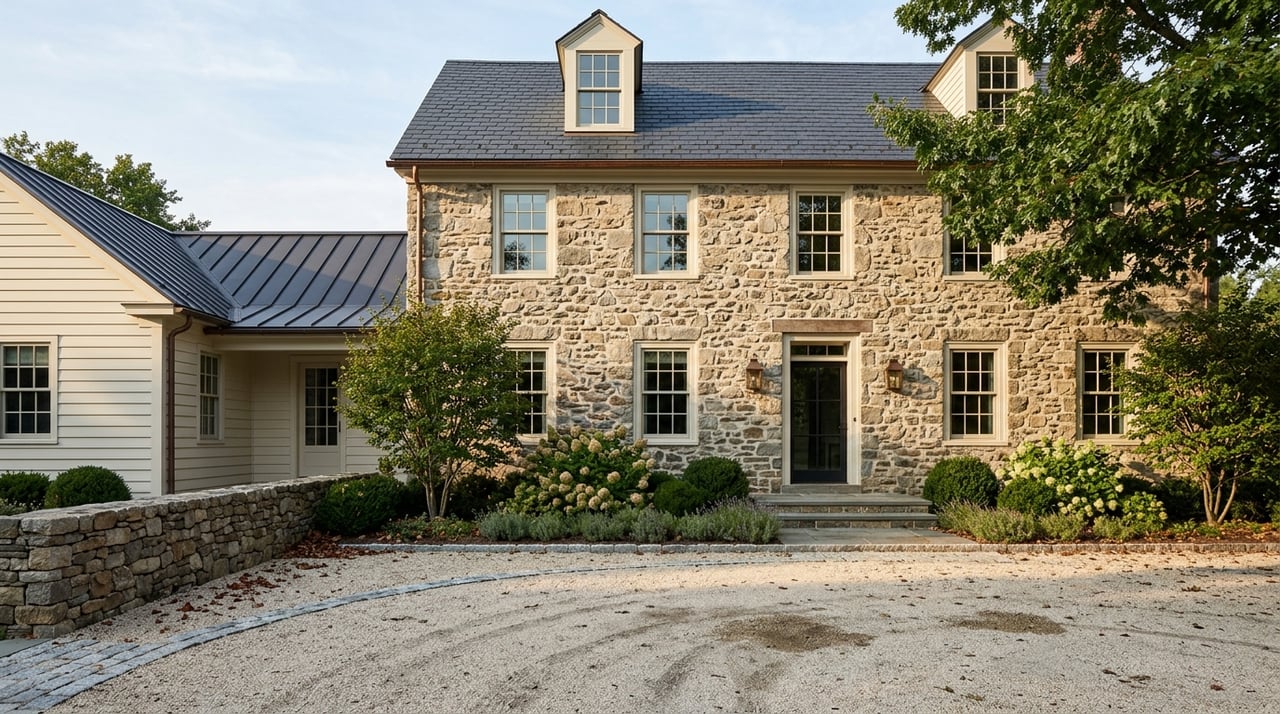
Are you picturing a classic stone farmhouse on open land, only to discover that “Saucon Valley farmhouse” can mean several very different things? That is one of the biggest reasons buyers need a local guide before they start touring. In Saucon Valley, farmhouse and estate properties can range from compact historic parcels to multi-acre holdings with barns, outbuildings, and more involved upkeep. This guide will help you understand what defines these homes, what to verify before you buy, and how to evaluate lifestyle fit with confidence. Let’s dive in.
What defines Saucon Valley farmhouses and estates
Saucon Valley is not a single municipality. It is a creek-centered corridor tied to places like Hellertown Borough, Lower Saucon Township, Upper Saucon, and nearby communities, with a landscape shaped by farmland, woodlands, rolling hills, and long-standing agricultural patterns.
That matters because the local housing stock does not read like one uniform neighborhood. Instead, you will find a mix of small-town convenience, preserved open space, and older properties that often reflect the area’s agricultural roots more than newer suburban development.
For many buyers, the appeal starts with the setting. The Saucon Rail Trail, municipal green space in Hellertown, active recreation areas, and the seasonal farmers market at Water Street Park all reinforce the area’s blend of scenic living and everyday convenience.
What local farmhouse style really looks like
In Saucon Valley, a true farmhouse often has more substance and history than the modern decorative version of the style. Local historic examples point to stone, brick, and heavy timber construction, along with preserved features and detached structures that reflect working-land origins.
The Heller Homestead, for example, includes a house first built in 1751 and later renovated in 1935 with Colonial Revival influences. The site also includes additional structures such as a widow’s house, root cellar, and barn ruin.
Another local example is the 1832 farmhouse occupied by the Hellertown Borough Authority. It still includes wide plank floors, hand-cut nails, hand-wrought German door handles, a basement spring, and a smokehouse.
The Wagner-Holum Farmstead adds another layer to the picture, with a brick house, a stone barn dated 1849, six smaller outbuildings, and a springhouse. Together, these examples suggest that buyers in Saucon Valley should expect authenticity, age, and original materials to be a meaningful part of the property story.
Why land matters as much as the house
In this market, the house is only part of the equation. Many farmhouse and estate properties are closely tied to the land around them, whether that means open yard space, preserved acreage, barn structures, or the shape and access of the parcel itself.
The local historic record supports that pattern. The Heller Homestead was originally part of a 250-acre tract, and the Wagner-Holum property began as an 184-acre holding tied to a larger agricultural landscape.
That history still affects how buyers should think today. A Saucon Valley farmhouse may be centered on the architecture, but it is often equally about how the land functions, what structures remain, and how much privacy or flexibility the parcel actually offers.
What to expect from lot sizes
One of the most important things to know is that acreage varies widely. You cannot assume that a farmhouse-style listing includes large usable land simply because it looks rural or historic.
For example, the Wagner-Holum Farmstead now sits on less than 5 acres, even though it originated as part of a much larger holding. At the same time, local planning rules in places like Upper Saucon Township are designed to protect large farm tracts in agricultural areas.
Upper Saucon’s zoning framework also shows how broad the lot-size range can be in more conventional residential settings. Minimum lot areas include 56,400 square feet in OSR, 24,200 square feet in R-1, and 12,100 square feet in R-2.
The practical takeaway is simple: verify the parcel, do not guess. In this niche, a farmhouse could sit on a relatively compact historic lot or on several acres with estate-like features.
How to verify acreage and parcel details
Before you get attached to a property, confirm what is actually included. In a market where parcel shape, easements, and usable land can vary so much, early due diligence can save time and frustration.
Northampton County and Lehigh County both maintain official parcel viewers. These tools can help you check acreage, lot lines, and parcel layout before or during your home search.
This step is especially helpful if you are comparing properties with outbuildings, shared edges, creek frontage, or irregular boundaries. It gives you a clearer sense of what you are buying beyond the listing photos.
Utilities can vary more than you expect
Older farmhouse and estate properties often come with mixed utility setups. That can affect your monthly costs, your renovation plans, and the questions you should ask before making an offer.
Upper Saucon Township states that it provides water service to only a portion of the township, using township groundwater wells and some Bethlehem water service, and it also operates the township sewer system. In other properties across the valley, well and septic may still be part of the equation.
Lower Saucon Township’s zoning FAQ notes that changes to on-lot sewage systems can require permits. So if you are planning future improvements, it is wise to confirm not only the current utility setup but also what may be involved if repairs or upgrades are needed.
Modernizing a historic property takes planning
Many Saucon Valley farmhouses have real age and preserved materials, which is part of their appeal. It also means updates may be more layered than in a newer suburban home.
Based on the age and retained features of local examples, buyers should be prepared to evaluate mechanical systems, kitchens, baths, energy-efficiency improvements, and the condition of original stone, wood, or barn elements. Some homes may be beautifully updated, while others may need a thoughtful restoration plan.
Exterior work is another major consideration. If you are imagining a new shed, expanded driveway, regrading, or updates to decks and patios, local approvals may come into play depending on the municipality.
Permits and township review to know about
In Lower Saucon Township, the zoning FAQ lists permits for projects including tree removal, fences, retaining walls, decks, patios, sheds, pools, hot tubs, additions, roof work, driveway enlargement or resurfacing, and on-lot sewage repairs. Hellertown also requires permits for items such as decks, patios, sheds, roof work, tree work in the right-of-way, and grading over 1,000 square feet.
For buyers, this means the planning process matters almost as much as design ideas. If you are considering a farmhouse or estate property because of its land and flexibility, be sure to ask what changes will require township review.
That question is especially important when a property includes older outbuildings, mature trees, or site features that may affect drainage, access, or placement of improvements. Your renovation vision may be possible, but the steps should be clear from the start.
Best questions to ask before you buy
A farmhouse or estate purchase usually goes more smoothly when you ask direct questions early. In Saucon Valley, the key issues tend to be practical rather than flashy.
Here are some of the most useful questions to bring to a showing or private tour:
- How much acreage is included with the property?
- How much of the land is actually usable?
- Is the home on public water and sewer, or well and septic?
- What original structures remain on the property?
- What is the condition of barns, springhouses, smokehouses, or other outbuildings?
- Which exterior changes would require township approval?
- Are there parcel layout or access details I should review in the county viewer?
These questions help you compare properties on more than appearance alone. They also help you see whether a home fits your long-term goals, whether that means preservation, light modernization, or estate-style living with more land to manage.
Why buyers are drawn to Saucon Valley
Saucon Valley offers a combination that is hard to replicate. You get historic architecture, creek-valley scenery, open-space character, and a planning framework that continues to protect farmland and large tracts in parts of the area.
At the same time, the lifestyle is not isolated. Trail access, community parks, and the farmers market add an everyday rhythm that appeals to buyers who want space without giving up connection to local amenities.
That balance is a big reason farmhouse and estate properties here continue to stand out. If you are looking for a home with character, land, and a strong sense of place, Saucon Valley gives you several distinct ways to find it.
When you are ready to compare historic homes, acreage properties, or estate listings in and around Saucon Valley, The Rebecca Francis Team offers discreet, high-touch guidance tailored to the details that matter most.
FAQs
What is a Saucon Valley farmhouse property?
- A Saucon Valley farmhouse property is typically an older home tied to the area’s agricultural history, often with stone or brick construction, original materials, and sometimes outbuildings such as barns, springhouses, or smokehouses.
How much land comes with Saucon Valley estate homes?
- Land size varies widely, from smaller historic parcels to multi-acre properties, so you should verify acreage and usable land on a property-by-property basis.
Are Saucon Valley farmhouses usually historic homes?
- Many local examples are historic homes or preserved farmsteads, including properties dating to 1751, 1832, and 1849, which helps explain why original materials and restoration needs are common.
Do Saucon Valley farmhouse properties use public utilities?
- Some properties may have public water and sewer, while others may rely on well and septic, so utility setup should always be confirmed before you buy.
Do exterior changes need permits in Saucon Valley?
- Yes, depending on the municipality, permits may be required for projects such as decks, patios, sheds, roof work, tree removal, grading, driveway changes, and certain sewage-related work.
Why do buyers choose Saucon Valley for farmhouse living?
- Buyers are often drawn to the area’s historic architecture, rolling landscape, preserved open space, trail access, parks, and small-town amenities that support a scenic but connected lifestyle.