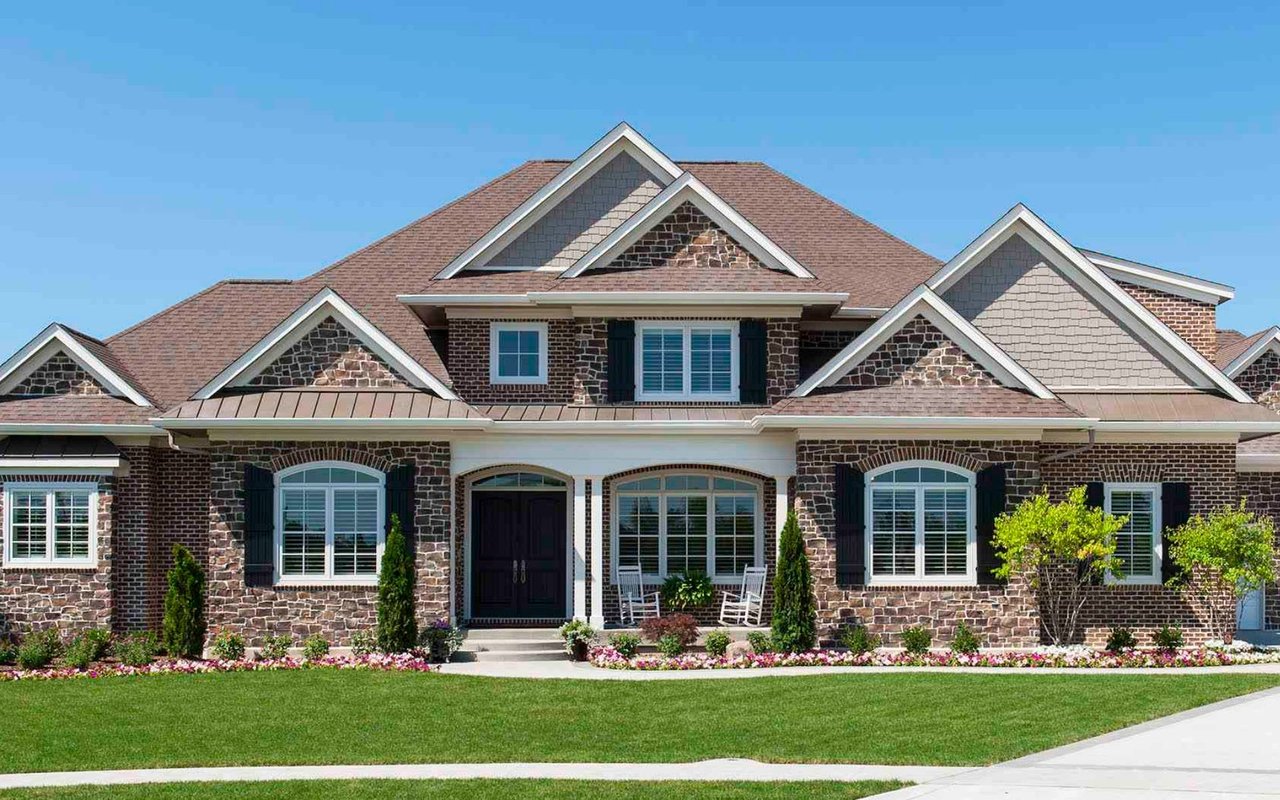
Picture a four-bedroom rowhouse a block off Fourth Street, priced to move at just under $260,000. A young family submits a solid offer, the kind that would have won almost anywhere else in the Lehigh Valley this year. They lose. The winning bid comes from a landlord who never walked through the kitchen, because the kitchen was never the point. He ran the math on four bedrooms at market rent and it worked before he saw a single photo.
That is not a story about a hot market. It is a story about two different buyers competing for the same house using two different formulas, and it explains something the portal median for Bethlehem will never tell you: the number you are looking at is an average of two markets that barely resemble each other.
The number that isn't really a number
Bethlehem's citywide median gets quoted as if it describes one place. It doesn't. On the north and west sides of the Lehigh River, homes have been trading in the high $300,000s to low $400,000s this year, with Northeast Bethlehem's trailing three-month median running around $395,000 as of May 2026, up 17 percent from the same stretch a year earlier. South Bethlehem tells a different story. Over the trailing twelve months, the typical sale price in that neighborhood has sat closer to $251,000, down roughly 13 percent from the year before.
Blend those two numbers and you get a citywide median that describes neither market accurately. A buyer using that blended figure to gauge what a South Bethlehem home should cost will overshoot. A buyer using it to gauge what a North Side Colonial should cost will undershoot. Neither error is small, and neither is random. It comes from the fact that South Bethlehem's housing stock is increasingly priced for rental yield, not for a family's monthly payment.
The rent math that outbids you
Here is the mechanism, and it is not subtle once you see it. A four or five-bedroom South Side house near Lehigh University can be rented to students at up to roughly $1,000 a bedroom. Do that math on the rowhouse above and a landlord clears more in rent from one semester than most families would put down in a mortgage payment over several months. Investigative reporting from the USC Center for Health Journalism documented that rents in the ZIP code covering South Bethlehem had climbed 34 percent since early 2019, with the typical apartment renting for about $1,600 a month at the time, nearly double the mortgage on a typical single-family home in the neighborhood. The gap between rent income and mortgage cost is the mechanism, and nothing about Lehigh's enrollment trajectory since then suggests it has closed.
That gap is the whole story. When the rental income on a house exceeds what an owner-occupant can justify paying, the house stops competing on the owner-occupant market and starts competing on the investment market instead, where the buyer pool includes companies built specifically for this. One landlord, Amicus Properties, now operates more than 100 rental properties in South Side Bethlehem, according to research compiled by the Local Housing Solutions policy lab. A company running that many units at once doesn't need to fall in love with a listing. It needs the math to work, and on the South Side, the math has worked for years.
Why this isn't new, and why 2026 matters anyway
None of this started this year. In 2016, Lehigh University's board approved a plan, later dubbed Path to Prominence, that set out to grow total enrollment by 20 percent over seven years. Growth on that scale means more students needing somewhere to sleep, and with on-campus housing capped, the overflow has landed almost entirely in South Bethlehem for the better part of a decade.
What changed this year is the first real supply-side response. In April 2026, Bethlehem's Planning Commission approved Lehigh's East Hill Residence Halls, a new 371-bed dormitory at Mountain Drive South designed specifically to absorb enrollment growth that has been pushing students off campus and into the neighborhood's housing stock. That is the kind of project that could eventually ease pressure on South Side rentals and, by extension, on the investor math that has been outbidding owner-occupants there.
Eventually is doing a lot of work in that sentence. According to coverage in The Brown and White, Lehigh's student newspaper, the new hall is not expected to open until fall 2028. A buyer shopping South Bethlehem today is shopping a market that won't see its first meaningful supply relief for roughly two more years. Anyone telling you this fixes itself by next spring hasn't checked the construction timeline.
What's different on the other side of the river
None of this dynamic touches North or West Bethlehem in the same way. Those neighborhoods are trading on ordinary owner-occupant demand, close to Liberty High School, walkable to Main Street, and increasingly desirable exactly because they aren't drawing landlord bids on every listing. That is why the appreciation numbers there look like a normal, healthy market rather than a market being pulled sideways by rental economics. If you are comparing a listing in each neighborhood and wondering why one seems to move faster and cost more per square foot, the university's footprint on the map is most of the answer.
What the city is building around this problem
City Hall isn't ignoring the pressure. Mayor J. William Reynolds used his 2026 state-of-the-city address to detail an "Opening Doors" housing stability plan, and the numbers behind it are worth knowing if you're weighing South Bethlehem for the next few years rather than the next few months.
- Bethlehem now expects 465 mixed-income housing units by fall 2026, up from an originally planned 120, a jump made possible by a $4.5 million land donation from Lehigh Valley Industrial Park and $16 million in federal tax credits secured this year, according to reporting in The Brown and White.
- The Bethlehem Economic Development Corporation launched a community survey in February 2026 to guide a full revisioning of the SouthSide Arts District, hiring the planning firm Derck & Edson after the Commonwealth awarded a Main Street Matters grant, reported by Lehigh Valley Press.
- High Hotels broke ground this summer on a 140-room Tempo by Hilton at 36 W. Third Street, expected to open in October 2027, according to the developer's announcement, a signal that hospitality investors are betting on the district's continued draw even as its residential math stays complicated.
- A long-vacant building at 13-15 E. Third Street, now called The Emerald on Third, has been fully reconstructed into roughly 17,000 square feet of mixed-use space with zoning approved for five residential units, as reported by Lehigh Valley Public Media, one example of the adaptive reuse projects the city says will define its next phase of growth as vacant land runs out.
Read together, these projects describe a neighborhood the city is actively investing in, not one it has written off. But investment in commercial and hospitality square footage doesn't by itself change the bedroom-by-bedroom rent math driving single-family purchases. That still runs through Lehigh's enrollment and its own housing pipeline.
What this means if you're actually shopping either side of the river
If you're comparing a South Bethlehem listing to one in the Northeast or West End using the citywide median as your yardstick, you're using the wrong ruler. South Bethlehem prices reflect competition from rental buyers who will not blink at a number that would stop a family cold, because their return isn't a home, it's a spreadsheet. North and West Bethlehem prices reflect ordinary owner-occupant demand, which is why they behave more like a market you'd recognize.
That doesn't mean South Bethlehem is off the table. It means walking in with realistic expectations about who else is bidding, what their math looks like, and how long the supply picture takes to shift.
FAQ
Will the new Lehigh dormitory bring South Bethlehem home prices back in line with the rest of the city? It should ease pressure once it opens, but not before fall 2028. Anyone shopping in the next two years is shopping the current dynamic, not a future one.
Does this affect every South Bethlehem listing, or just certain blocks? The pressure is heaviest on multi-bedroom houses near Lehigh's campus, the kind that convert cleanly into per-bedroom student rentals. Smaller homes farther from campus, and properties inside the South Side Historic District where use restrictions apply, tend to see less landlord competition.
Should a family still consider buying in South Bethlehem? It can still make sense, especially with a strong offer, flexible terms, or a listing that doesn't lend itself to rental conversion. The point isn't to avoid the neighborhood. It's to understand who you're bidding against before you write the offer.
If you're weighing a purchase on either side of the Lehigh River and want an honest read on what a specific listing is actually competing against, the Rebecca Francis Team can walk you through it block by block. Request a private consultation to talk through your search.