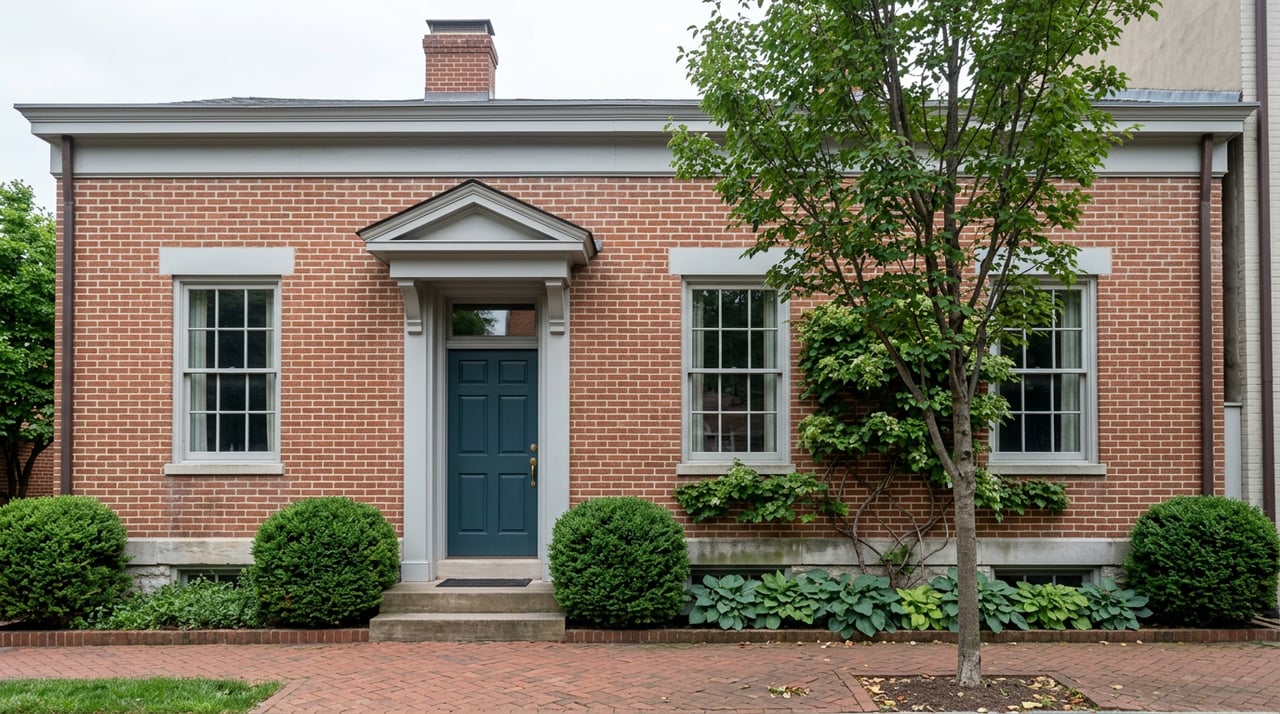
A homeowner on the South Side spends a few thousand dollars staging her 1920s foursquare, has the photographs done, and lists in early September. She has already scheduled the city inspection the way Bethlehem has required since long before this year, filed the report with her agreement of sale, and assumed the paperwork trail ends there. Under the ordinance the city adopted in July, it does not. The report and any notice of violation now have to reach the buyer before closing, not simply exist somewhere in the file.
That is a small phrase change with a real consequence. It moves the moment a buyer learns about a missing GFCI outlet or an unsafe handrail from the settlement table, where there is no leverage left to negotiate, to the middle of the transaction, where there still is.
What City Council actually passed
Bethlehem City Council approved the update on a 5-1 vote in July, according to WFMZ's coverage of the meeting. The measure adds formal definitions for violations and occupancy certificates, requires city inspections before property transfers, creates a temporary certificate option for properties with open code issues, sets deadlines for correcting those issues, and updates the inspection and reinspection fees. City officials framed the changes as bringing Bethlehem's process in line with Pennsylvania's Municipal Code and Ordinance Compliance Act.
The one council member who voted no did so over cost, not substance. Councilmember Bryan Callahan, who also identified himself as a landlord, argued the added fees get passed straight into rent. "Rental rates keep going up and up and up," he said during the meeting. His objection was about pricing pressure on the rental side of the market, but it is worth knowing the vote wasn't unanimous, because it tells you the fee increase was real enough to draw a dissent.
The rule underneath the rule
None of this appears from nowhere. Bethlehem has required a pre-listing inspection for years under Article 119 of the city code. A seller or their agent has ten business days from the date a property is offered or listed to contact the city's Housing Inspections Office and schedule it. Whatever the inspector finds becomes a report on zoning classification and any uncorrected violations of housing, building, safety, or fire code, and that report gets attached to the agreement of sale.
Article 1731 covers the certificate of occupancy itself, and it already builds in a repair clock. Once ownership transfers, violations have to be abated within 90 days for an owner-occupied property or 30 days if the home is a rental. The same article lets the city double the inspection fee for anyone who sells or rents without getting the inspection done at all.
What the July ordinance changes is the delivery point. Attaching a report to a signed agreement of sale is a paperwork event. Requiring that the report and any violation notice reach the buyer before closing is a timing event, and timing is what actually shapes a negotiation. A buyer who learns about a code issue during their inspection contingency period can still ask for a credit or a repair. A buyer who learns about it at the settlement table is choosing between walking away from a deal they have already committed to or closing anyway.
What a Bethlehem inspector is actually looking for
The city enforces the 2018 International Property Maintenance Code through its Bureau of Housing Inspections, and the categories that come up most often on older Bethlehem housing stock are predictable if you know what to check before the inspector does:
- Smoke detectors that are missing, expired, or not hardwired where required
- GFCI outlets absent from kitchens and bathrooms
- Handrails on interior or exterior stairs that don't meet current code
- Exterior paint or siding in poor repair
- Accumulated exterior debris or overgrowth that reads as a maintenance violation
None of these are unusual for a home built before mid-century electrical and safety standards existed, which describes a meaningful share of the historic housing in Bethlehem's Moravian district and the streets around it. That is precisely the housing stock where a pre-listing walk-through, done before the city's inspector ever shows up, earns its cost back in avoided negotiation friction.
The temporary certificate is the safety valve, not a shortcut
The new ordinance formalizes a temporary certificate of occupancy for properties with violations still open at the time of sale, paired with a deadline for correcting them. That is a meaningful option for a seller who does not want a single outstanding item to delay closing, but it is not a way around disclosure. The violation still has to be in the paperwork the buyer sees before closing. The temporary certificate buys time to fix the problem. It does not buy silence about it.
One city, several rulebooks
Here is the detail that catches people off guard: this ordinance governs the City of Bethlehem specifically. It does not extend across the river or the township line. Bethlehem Township and Hanover Township each run their own resale inspection programs, with their own scheduling windows and fee schedules. Hanover Township, for instance, has required an inspection and valid certificate of occupancy on every property transferred since 2010, administered separately from the city's Bureau of Housing Inspections.
That means the word "Bethlehem" on a listing does not tell you which set of rules applies. The parcel's municipal jurisdiction does. A buyer comparing a home inside city limits to one a few blocks away in the township is not just comparing square footage and lot size. They are comparing two different regulatory timelines for getting to a closing table.
| City of Bethlehem | Hanover Township | |
|---|---|---|
| Governing rule | Article 119 / Article 1731, updated July 2026 | Township resale inspection ordinance, in effect since 2010 |
| Scheduling window | 10 business days from listing | Set by township building and zoning office |
| Violation abatement | 90 days (owner-occupied) / 30 days (rental) post-transfer | Determined case by case |
| Disclosure timing | Report and violation notice now required before closing | Report mailed to seller after inspection |
The check that has nothing to do with the city
One more layer sits on top of all of this, and it has nothing to do with any municipality. The Lehigh Valley sits on the Reading Prong, a geological formation that produces some of the highest radon readings in the country. Nearly every buyer's inspector will test for it regardless of what the city's certificate of occupancy process covers, and mitigation typically runs $800 to $2,500 when a system is needed, according to a Pennsylvania closing-cost guide. That test happens on the buyer's schedule, through their own inspector, and it is worth planning for separately from anything the city requires. Sellers who treat the municipal inspection as the only inspection are usually surprised by this one.
What this means if you're listing soon
If you own a home inside Bethlehem city limits and expect to list in the coming months, the sequence that protects you is the same sequence the ordinance now requires of everyone, just started earlier. Walk the house yourself, or have someone who knows the code walk it with you, before you call the city. Fix what you can fix quietly. Schedule the inspection the moment you decide to list, not the week you go live, since the ten-business-day clock is not generous. Budget for the updated fee. And go into the buyer conversation assuming the report will be in their hands well before the closing table, because under the new rule, it will be.
Common questions
Does this ordinance apply to homes in Bethlehem Township or Hanover Township? No. It governs the City of Bethlehem only. Surrounding townships run separate resale inspection programs with their own timelines and fees.
What if my home already has a valid certificate of occupancy from a recent transaction? Article 1731 treats a certificate as valid for one year from the original inspection, or until the property becomes vacant in the case of a rental, whichever period is longer. A sale outside that window will require a new inspection.
Can I still close if the inspection turns up a violation? Often yes, through the temporary certificate option the July ordinance formalized, paired with a deadline to complete repairs. The violation still has to be disclosed to the buyer before closing under the updated rule.
Is the radon test part of the city's inspection? No. Radon testing is a separate step driven by the buyer's own inspector and lender requirements, not the municipal certificate of occupancy process.
Selling a historic Bethlehem home was never just about staging and price. It was always about sequencing, knowing which inspection happens when, which repairs matter to which timeline, and which disclosure has to land before which signature. The Rebecca Francis Team works inside these exact procedural details every week, for exactly this kind of property. If you're weighing a listing in Bethlehem this fall, request a private consultation before you schedule anything with the city, so the sequence works in your favor from the first call.